
Cargo Services in Asia Pacific: Shipping & Container Solutions
In today’s interconnected global economy, the efficient movement of goods is paramount for business success. This is especially true across the dynamic Asia Pacific region.
Understanding robust cargo services is vital. It is a strategic imperative for business owners, project managers, and procurement teams. Reliable international cargo services ensure products reach their destination safely, on time, and within budget. These services cover everything from intricate supply chains to last-mile delivery.
This article demystifies cargo management. It highlights how expert cargo shipping services, efficient cargo handling, and seamless cargo delivery are foundational to trade. Versatile shipping containers underpin this entire ecosystem.
Understanding Comprehensive Cargo Services
At its core, cargo refers to goods or merchandise conveyed by ship, aircraft, or vehicle. The services built around this movement are extensive and vital.
What are Cargo Services?
Cargo services encompass the entire process of transporting goods from one point to another. This includes everything from initial pickup and warehousing to customs clearance, freight forwarding, and final delivery. Cargo service providers manage the complexities involved. They ensure compliance with regulations and optimise routes for efficiency, regardless of transport mode. In Singapore, a major transhipment hub, these services are incredibly sophisticated. They support trade flows throughout Southeast Asia and beyond.
Why are International Cargo Services Essential for Businesses?
For businesses operating in or with the Asia Pacific region, international cargo services are indispensable. They facilitate cross-border trade, enable global supply chains, and connect manufacturers with consumers across vast distances.
Without robust international logistics, companies would struggle to source raw materials, export products, or expand into new markets. For instance, a Malaysian electronics manufacturer exporting to Europe relies on these services. They handle customs, ocean freight, and documentation, ensuring goods are protected.
The Backbone of Global Trade: Cargo Shipping Services and Container Solutions
When moving large volumes of goods internationally, cargo shipping services are preferred. Most businesses choose them due to their cost-effectiveness and capacity.
Sea Freight and Its Advantages in Asia Pacific
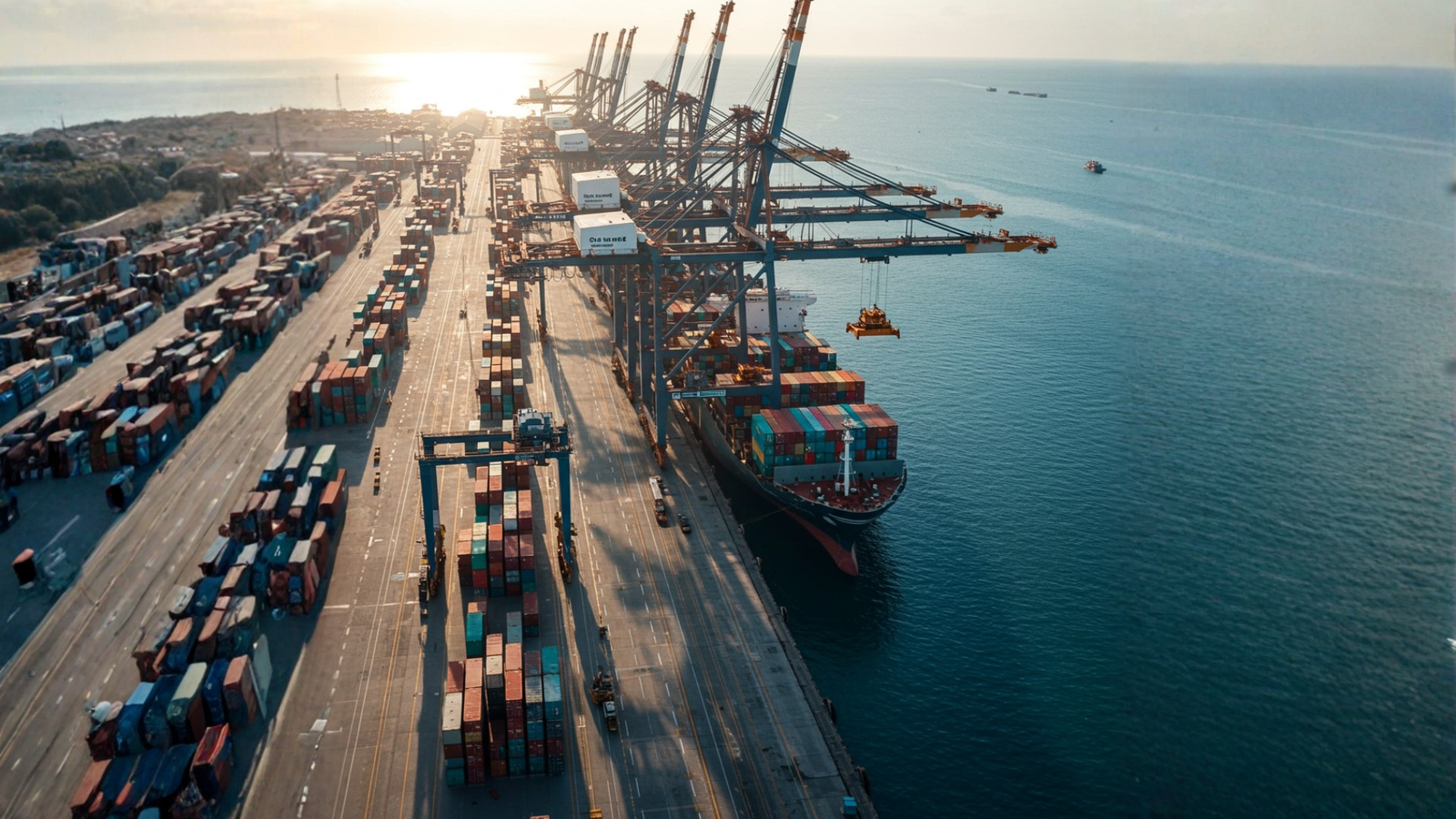
Sea freight remains the most economical option for transporting goods internationally, especially within and out of the Asia Pacific. Major ports like Singapore, Shanghai, Hong Kong, and Port Klang serve as critical gateways. They handle millions of Twenty-foot Equivalent Units (TEUs) annually. The advantages include:
- Cost-Efficiency: Significantly lower costs compared to air freight for bulk shipments.
- Capacity: Ability to transport vast quantities of goods, including oversized or heavy items.
- Environmental Impact: Generally more energy-efficient per tonne-kilometre than air freight.
- Global Reach: Access to virtually any port city worldwide.
This method is crucial for industries like manufacturing, construction, agriculture, and retail. It ensures a steady flow of materials and products across the region.
Types of Containers for Various Cargo Needs
The standardisation of shipping containers revolutionised cargo handling and international trade. These robust, stackable units protect goods from the elements and streamline intermodal transport. Depending on the nature of the cargo, different types of containers are utilised:
- Standard Dry Containers: The most common type, used for general cargo that doesn’t require temperature control. Available in 20-foot and 40-foot lengths.
- Refrigerated Containers (Reefers): Essential for temperature-sensitive goods like perishables (e.g., seafood from Vietnam to Japan), pharmaceuticals, and certain chemicals, maintaining precise temperatures during transit.
- Open-Top Containers: For oversized cargo that can only be loaded from the top, such as heavy machinery or construction materials.
- Flat Rack Containers: Designed for extremely heavy, wide, or tall cargo that doesn’t fit into standard containers, like vehicles or large industrial components.
- Tank Containers: Used for transporting liquids, gases, and powders safely.
Choosing the right container is critical for shipment safety and integrity. It is a key part of effective cargo shipping services.
Efficient Cargo Handling and Delivery: From Port to Destination
Once cargo arrives at a port, the next crucial steps involve efficient cargo handling and reliable cargo delivery to the final destination.
Key Aspects of Cargo Handling
Cargo handling involves moving, storing, and managing goods. These processes happen at various points in the supply chain. This includes ports, warehouses, and distribution centres. This involves:
- Loading and Unloading: Utilising specialised equipment like cranes, forklifts, and reach stackers.
- Warehousing: Temporary storage of goods before further distribution.
- Consolidation and Deconsolidation: Combining smaller shipments into full container loads (FCL) or breaking down FCLs into smaller, individual shipments.
- Documentation: Managing customs forms, bills of lading, and other essential paperwork.
Proper cargo handling minimises damage and prevents delays. It ensures compliance with safety standards. This is vital for high-value or fragile goods. Many of these move through Singapore’s bustling logistics hubs.
The Last Mile: Ensuring Reliable Cargo Delivery
The “last mile” of cargo delivery is often the most challenging but critical part of the logistics chain. It involves transporting goods from a distribution hub to the final recipient. This could be a retail store, a construction site, or a manufacturing plant. Efficient last-mile delivery requires:
- Optimised Routing: Using technology to plan the most efficient delivery paths.
- Appropriate Vehicles: Selecting trucks or vans suitable for the cargo size and urban environments.
- Real-time Tracking: Providing visibility for customers and logistics managers.
- Customised Solutions: Such as direct site delivery for project cargo or timed deliveries for retail replenishment.
For large projects or remote sites, the need for on-site storage often arises. Repurposed shipping containers offer an ideal solution.
Beyond Transport: Repurposing Containers for Versatile Business Needs
Shipping containers, while primarily designed for cargo transport, offer incredible versatility beyond their initial purpose. Their robust construction and modular nature make them ideal for repurposing into various functional spaces. This is especially true in space-constrained or temporary settings across Asia Pacific.
- Construction Sites: In bustling cities like Singapore, containers are frequently converted into secure site offices, meeting rooms, or tool storage units, providing durable and weather-resistant solutions.
- Retail Pop-ups and F&B Outlets: Trendy cafes, boutique shops, and temporary exhibition spaces often utilise modified containers for their unique aesthetic and mobility at events or seasonal locations.
- Cold Storage Solutions: Refrigerated containers (reefers) can be leased or purchased for on-site cold storage, crucial for food and beverage companies, pharmaceutical distributors, or event organisers needing temporary temperature-controlled environments.
- Temporary Accommodation: For remote work sites or humanitarian efforts, containers can be converted into comfortable living quarters.
- Mobile Workshops: Equipping a container with tools and machinery creates a portable workshop that can be deployed wherever needed.
5 Considerations When Choosing a Container Provider
When selecting a partner for your cargo and container needs, consider these points. This ensures you choose a provider aligning with your operational requirements:
- Range of Services: Does the provider offer comprehensive services, including container sales, leasing (new and used), modifications, repairs, and re-inspection? This ensures a single point of contact for diverse needs.
- Container Quality and Certification: Verify that containers meet international standards (e.g., ISO) and are in good condition, especially for international shipping or long-term repurposing.
- Customisation Capabilities: If you need a container modified into an office or a special storage unit, check their ability to execute custom designs and installations.
- Logistics and Delivery: Evaluate their capacity for efficient cargo delivery, including transportation to your specific site, even in challenging locations.
- Regional Expertise: A provider with deep knowledge of the Asia Pacific market understands local regulations, logistical challenges, and industry-specific requirements, which is invaluable.
Frequently Asked Questions about Cargo and Container Solutions
What is the difference between freight and cargo?
“Cargo” refers to the goods being transported. “Freight” describes their commercial transportation and associated charges. These terms are often used interchangeably.
How do I choose the right container for my cargo?
The choice depends on several factors. Consider the goods’ type: dry, refrigerated, or oversized. Also, assess dimensions, weight, transport mode (sea, land), and budget. Consult a container specialist. They can help determine the most suitable option. This includes standard dry containers, reefers, or specialised units.
What affects international cargo shipping costs?
Many factors influence shipping costs. These include cargo volume and weight, distance, and route. Transport mode (sea, air, land), fuel prices, and customs duties also matter. Insurance and special handling needs, like temperature control, affect pricing too.
Conclusion
Effective cargo services are the lifeblood of trade and industry in the Asia Pacific. Managing intricate international cargo services and dependable cargo shipping services requires expertise. So does precise cargo handling and timely cargo delivery.
The adaptability of shipping containers offers unique solutions for businesses. These include storage, operational spaces, and creative ventures beyond pure logistics. Whether shipping goods or requiring a customised on-site solution, selecting the right partner is key. It unlocks efficiency and supports business growth.
Considering container solutions for your next project? Or perhaps you need expert advice on optimising your cargo operations? We invite you to contact us for a detailed consultation. Our team is ready to discuss your specific requirements. We provide competitive quotes for container sales, leasing, modifications, or re-inspection. We can even arrange a site visit to assess your needs across Singapore and the broader Asia Pacific region.